'%20d='m0%200%2016%2011h61%2061%2061%2061%2060L47%2037h61%2061%2060%2061L16%2063h61%2061%2061%2061%2060L47%2089h61%2061%2060%2061L16%20115h61%2061%2061%2061%2060L47%20141h61%2061%2060%2061L16%20166h61%2061%2061%2061%2060L47%20192h61%2061%2060%2061L16%20218h61%2061%2061%2061%2060z'/%3e%3c/svg%3e)

'%3e%3cpath%20fill='%23C00'%20d='M0%200h640v480H0z'/%3e%3cpath%20fill='%23C00'%20d='M0%200h640v34.3H0z'/%3e%3cpath%20fill='%23fff'%20d='M0%2034.3h640v34.3H0z'/%3e%3cpath%20fill='%23C00'%20d='M0%2068.6h640v34.3H0z'/%3e%3cpath%20fill='%23fff'%20d='M0%20102.9h640V137H0z'/%3e%3cpath%20fill='%23C00'%20d='M0%20137.1h640v34.3H0z'/%3e%3cpath%20fill='%23fff'%20d='M0%20171.4h640v34.3H0z'/%3e%3cpath%20fill='%23C00'%20d='M0%20205.7h640V240H0z'/%3e%3cpath%20fill='%23fff'%20d='M0%20240h640v34.3H0z'/%3e%3cpath%20fill='%23C00'%20d='M0%20274.3h640v34.3H0z'/%3e%3cpath%20fill='%23fff'%20d='M0%20308.6h640v34.3H0z'/%3e%3cpath%20fill='%23C00'%20d='M0%20342.9h640V377H0z'/%3e%3cpath%20fill='%23fff'%20d='M0%20377.1h640v34.3H0z'/%3e%3cpath%20fill='%23C00'%20d='M0%20411.4h640v34.3H0z'/%3e%3cpath%20fill='%23fff'%20d='M0%20445.7h640V480H0z'/%3e%3cpath%20fill='%23006'%20d='M0%20.5h320v274.3H0z'/%3e%3cpath%20fill='%23FC0'%20d='m207.5%2073.8%206%2040.7%2023-34-12.4%2039.2%2035.5-20.8-28.1%2030%2041-3.2-38.3%2014.8%2038.3%2014.8-41-3.2%2028.1%2030-35.5-20.8%2012.3%2039.3-23-34.1-6%2040.7-5.9-40.7-23%2034%2012.4-39.2-35.5%2020.8%2028-30-41%203.2%2038.4-14.8-38.3-14.8%2041%203.2-28.1-30%2035.5%2020.8-12.4-39.3%2023%2034.1zm-33.3%201.7a71%2071%200%200%200-100%2065%2071%2071%200%200%200%20100%2065%2080%2080%200%200%201-83.2%206.2%2080%2080%200%200%201-43.4-71.2%2080%2080%200%200%201%20126.6-65'/%3e%3c/g%3e%3cdefs%3e%3cclipPath%20id='my-a'%3e%3cpath%20fill='%23fff'%20d='M0%200h640v480H0z'/%3e%3c/clipPath%3e%3c/defs%3e%3c/svg%3e)

'%20transform='translate(80)scale(.9375)'%3e%3cpath%20fill='%23da251d'%20d='M-128%200h768v512h-768z'/%3e%3cpath%20fill='%23ff0'%20d='M349.6%20381%20260%20314.3l-89%2067.3L204%20272l-89-67.7%20110.1-1%2034.2-109.4L294%20203l110.1.1-88.5%2068.4%2033.9%20109.6z'/%3e%3c/g%3e%3c/svg%3e)

scale(176.87999)'%3e%3cpath%20id='mm-a'%20fill='%23fff'%20d='m0-1%20.3%201h-.6z'/%3e%3cuse%20xlink:href='%23mm-a'%20width='100%25'%20height='100%25'%20transform='rotate(-144)'/%3e%3cuse%20xlink:href='%23mm-a'%20width='100%25'%20height='100%25'%20transform='rotate(-72)'/%3e%3cuse%20xlink:href='%23mm-a'%20width='100%25'%20height='100%25'%20transform='rotate(72)'/%3e%3cuse%20xlink:href='%23mm-a'%20width='100%25'%20height='100%25'%20transform='rotate(144)'/%3e%3c/g%3e%3c/svg%3e)

'/%3e%3cuse%20xlink:href='%23cn-a'%20width='30'%20height='20'%20transform='matrix(-12.33562%20-20.5871%2020.58684%20-12.33577%20240.3%2048)'/%3e%3cuse%20xlink:href='%23cn-a'%20width='30'%20height='20'%20transform='matrix(-3.38573%20-23.75998%2023.75968%20-3.38578%20288%2095.8)'/%3e%3cuse%20xlink:href='%23cn-a'%20width='30'%20height='20'%20transform='matrix(6.5991%20-23.0749%2023.0746%206.59919%20288%20168)'/%3e%3cuse%20xlink:href='%23cn-a'%20width='30'%20height='20'%20transform='matrix(14.9991%20-18.73557%2018.73533%2014.99929%20240%20216)'/%3e%3c/svg%3e)
'%20transform='translate(88%20-32)'%3e%3cpath%20fill='%23fff'%20d='M-128%2032h720v480h-720z'/%3e%3ccircle%20cx='523.1'%20cy='344.1'%20r='194.9'%20fill='%23bc002d'%20transform='translate(-168.4%208.6)scale(.76554)'/%3e%3c/g%3e%3c/svg%3e)
'%20transform='translate(89.8%20.4)scale(.9375)'%3e%3cpath%20fill='%23fff'%20d='M-95.8-.4H587v512H-95.8Z'/%3e%3cg%20transform='rotate(-56.3%20361.6%20-101.3)scale(10.66667)'%3e%3cg%20id='kr-c'%3e%3cpath%20id='kr-b'%20fill='%23000001'%20d='M-6-26H6v2H-6Zm0%203H6v2H-6Zm0%203H6v2H-6Z'/%3e%3cuse%20xlink:href='%23kr-b'%20width='100%25'%20height='100%25'%20y='44'/%3e%3c/g%3e%3cpath%20stroke='%23fff'%20d='M0%2017v10'/%3e%3cpath%20fill='%23cd2e3a'%20d='M0-12a12%2012%200%200%201%200%2024Z'/%3e%3cpath%20fill='%230047a0'%20d='M0-12a12%2012%200%200%200%200%2024A6%206%200%200%200%200%200Z'/%3e%3ccircle%20cy='-6'%20r='6'%20fill='%23cd2e3a'/%3e%3c/g%3e%3cg%20transform='rotate(-123.7%20191.2%2062.2)scale(10.66667)'%3e%3cuse%20xlink:href='%23kr-c'%20width='100%25'%20height='100%25'/%3e%3cpath%20stroke='%23fff'%20d='M0-23.5v3M0%2017v3.5m0%203v3'/%3e%3c/g%3e%3c/g%3e%3c/svg%3e)




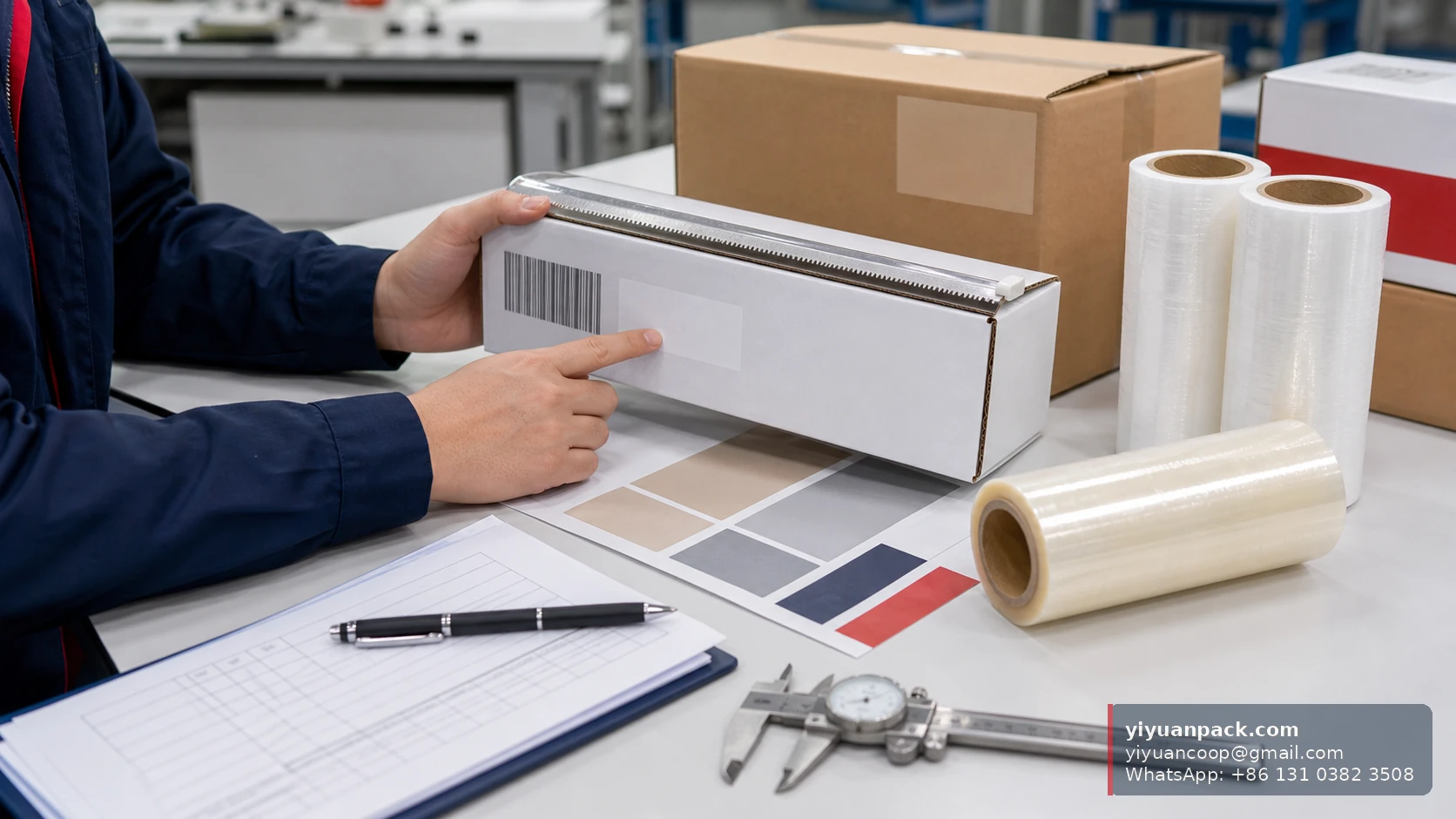
Private label cling film is usually not a simple packaging change. For importers, supermarket buyers, and food-service distributors, it connects film specification, roll format, cutter box design, barcode use, carton packing, and market documentation. A roll that works well in a plain sample can still create problems if the box tears, the blade cuts poorly, the artwork file is wrong, or the carton packing does not match the buyer's warehouse system.
- Private label cling film should be developed around the target channel, not only around logo placement.
- Buyers should confirm material, roll width, roll length, core size, cutter box structure, carton packing, and artwork before mass production.
- PE and PVC cling film can fit different private label markets depending on food use, tray wrapping needs, and local requirements.
- MOQ is affected by film specification, box printing, carton printing, roll length, and whether the order uses standard or custom packing.
- A good approval process includes film sample testing, box mockup confirmation, carton label review, and final pre-production file approval.
This guide was prepared from YIYUAN cling film packaging project experience, importer private label requirements, and public food-contact material references, including the FDA food-contact substances explanation and European Commission food-contact material legislation overview. Food-contact, labeling, barcode, and compliance requirements should be checked for the exact product, destination market, and sales channel.
For private label cling film, buyers should first define the market and use case, then confirm film material, roll size, packaging structure, artwork, carton packing, and documentation. The safest development path is to approve the film and the packaging separately before final production. This reduces the risk of a nice-looking box containing a roll that does not match the buyer's real channel.
Why Private Label Cling Film Needs a Clear Specification
Private label orders often start with a simple request: "Can you print our brand on the box?" That is only one part of the project. A retail box, food-service cutter box, refill roll, or supermarket fresh wrap roll may need different material, roll size, carton quantity, blade style, and shelf presentation.
Representative buyer scenario: A regional distributor wants to launch a house brand cling film line for restaurants and small supermarkets. The buyer needs one standard PE food wrap SKU for kitchens and one PVC fresh wrap SKU for tray wrapping. If both products use the same box design without clear specification, the sales team may confuse usage, pricing, and customer expectations.
YIYUAN can support private label development across cling film products, including PE cling film and PVC fresh wrap. Buyers should match the design work with the material and channel before approving artwork.
PE, PVC, Retail, and Food-Service Private Label Options
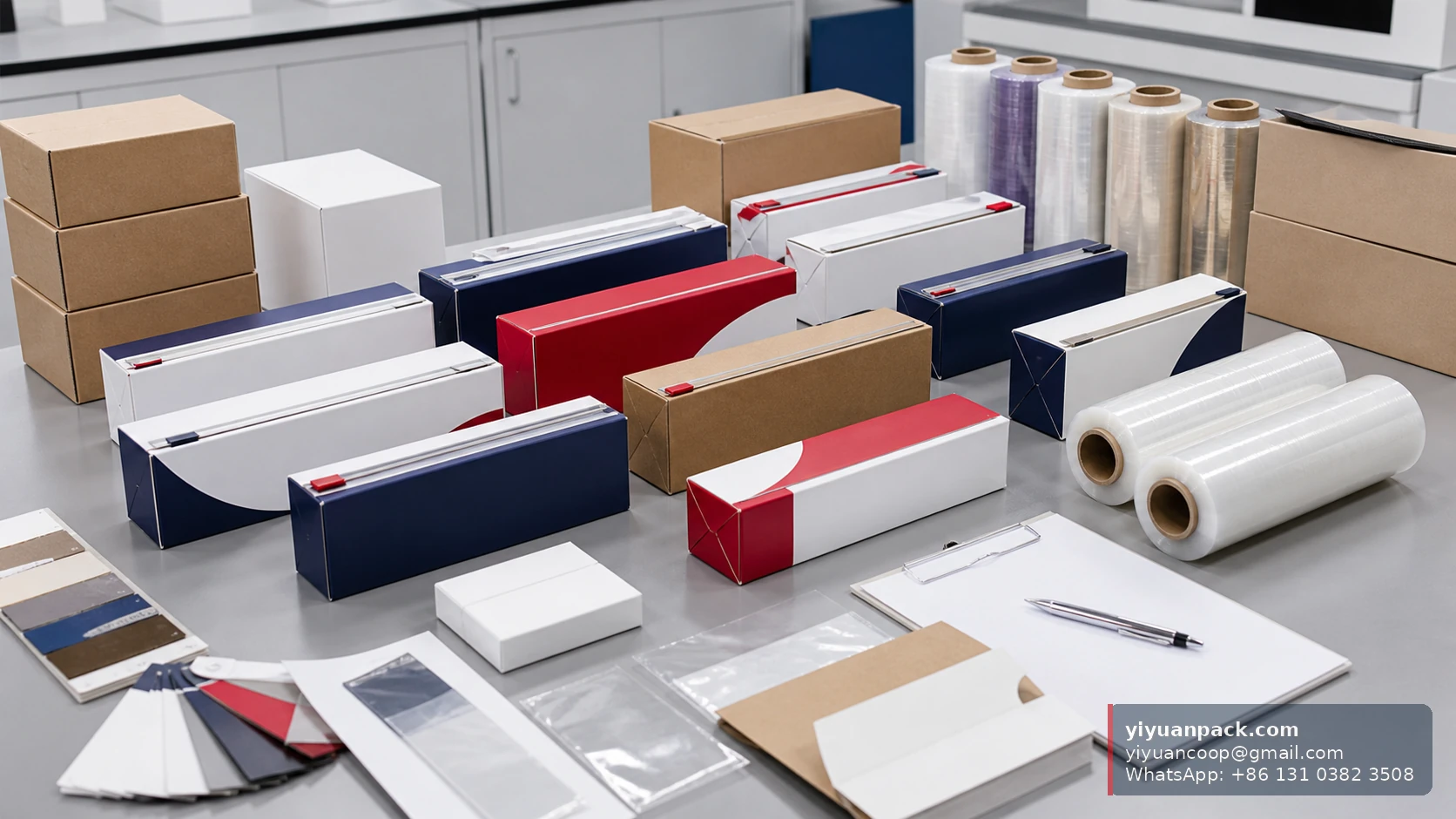
Private label cling film is not one fixed product. A buyer may need household rolls, restaurant rolls, jumbo rolls for rewinding, or supermarket fresh wrap. The best material and packing format depend on the sales channel.
General food wrapping
Often used for household, kitchen, and food-service wrapping where buyers want a broad general-purpose SKU.
Tray and display wrapping
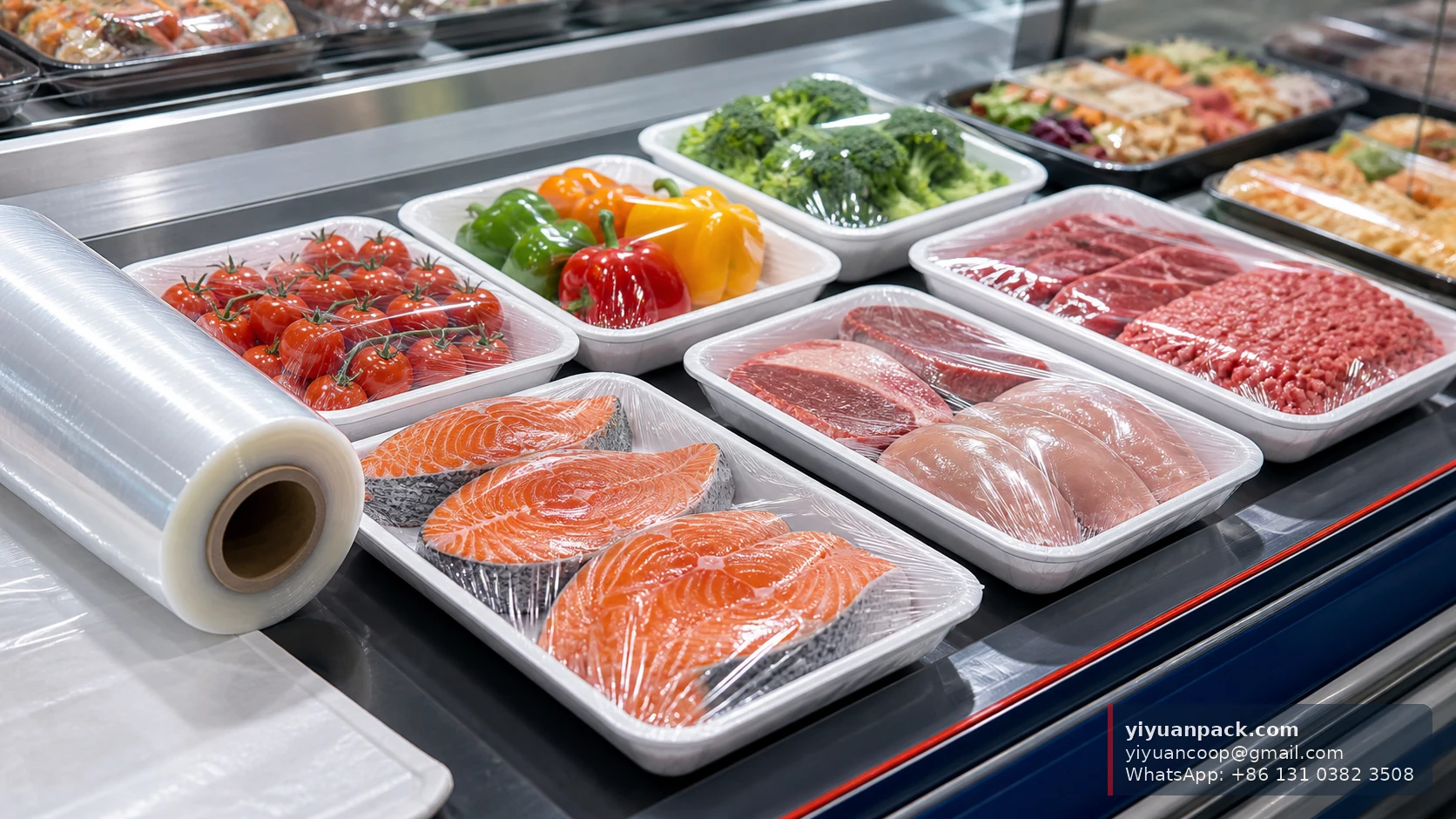
Often reviewed for supermarket tray wrapping where clarity, stretch, and cling on tray edges are key purchase factors.
Converter or rewinding use
Fits buyers who already have rewinding, slitting, or local packaging capability and want to control finished roll packing.
Specification Items Buyers Should Confirm First
Before discussing box artwork, buyers should confirm the practical specification. Artwork is easier to adjust than a wrong roll length, wrong width, wrong core, or weak box structure. The product specification should also match the target sales channel and local documentation requirement.
| Item | Why It Matters | Buyer Confirmation |
|---|---|---|
| Material | PE and PVC serve different wrapping scenarios | Confirm target food use, market, and sample performance |
| Width and length | Controls usability, price comparison, and shelf positioning | Confirm common local SKU sizes before printing boxes |
| Core size | Affects dispenser fit and rewinding stability | Check with existing dispenser, cutter box, or rewinding line |
| Cutter box and blade | Influences user experience and complaint rate | Test pull-out smoothness, box strength, and cutting behavior |
| Carton packing | Affects warehouse handling, freight, and retailer receiving | Confirm pieces per carton, carton size, gross weight, and pallet plan |
| Artwork and labels | Controls brand presentation and sales channel approval | Review dieline, barcode area, language, warning text, and carton marks |
MOQ and Cost Factors for Custom Packaging
MOQ for private label cling film depends on more than the film itself. Printed boxes, carton labels, custom roll lengths, and special packing can all affect minimum quantity and lead time. If the buyer needs a lower trial order, a standard film specification with simpler private label packaging may be more practical than a fully custom product.
Standard film plus custom box
Use a proven width, length, and material, then customize the retail box or carton label for first market testing.
Custom size and packaging
Better for mature buyers with clear sales data, stable repeat orders, and confirmed channel requirements.
Several SKUs under one brand
Plan SKU names carefully so PE general wrap, PVC fresh wrap, and food-service rolls do not confuse sales teams.
Artwork, Barcode, and Carton Review
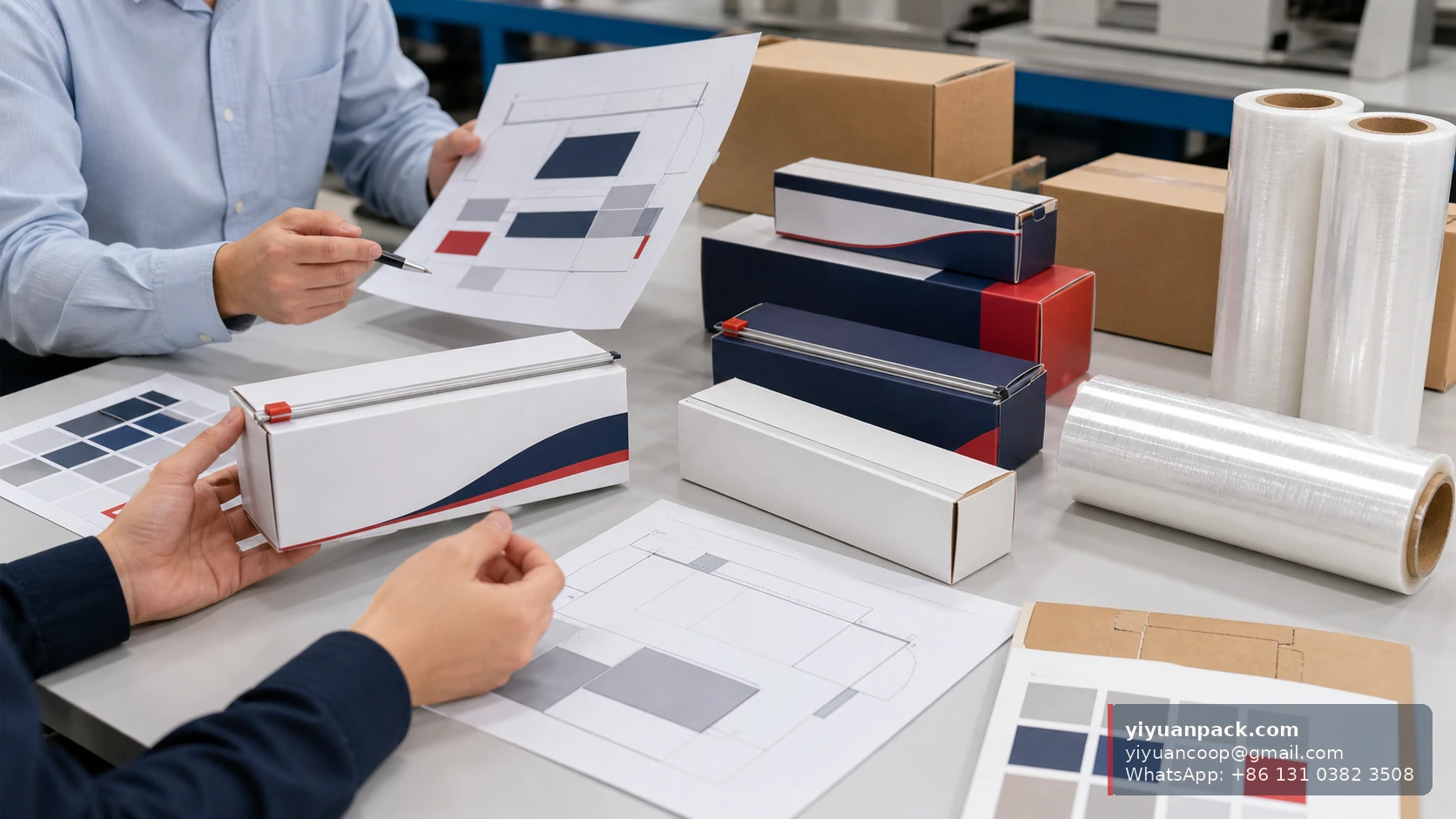
Artwork approval should be treated as a production control step, not only a visual design step. Buyers should check dieline size, blade position, opening direction, barcode area, carton marks, language requirements, and product claims. If the product is sold through supermarkets or retail chains, the buyer should confirm barcode and label requirements before mass printing.
Product claims need special care. Avoid using broad claims that the exact product cannot support in the destination market. For example, food-contact wording, recycling marks, anti-fog claims, and temperature-use claims should match the actual product documents and local requirements.
Common Private Label Mistakes to Avoid
Many private label cling film problems happen before production starts. The buyer may approve attractive custom packaging but leave the film, carton, or retail requirements unclear. These mistakes are expensive because printed boxes and cartons are difficult to reuse after the specification changes.
PE and PVC confusion
Do not use one design system without clearly separating PE cling film, PVC fresh wrap, roll length, and target usage on the box.
Wrong product description
If the sample changes after box printing, the custom packaging may show the wrong size, material, or recommended use.
Warehouse complaints
Confirm carton quantity, weight, shipping marks, and pallet loading before the buyer's warehouse receives the first order.
Approval Workflow Before Mass Production
A clear approval workflow reduces private label mistakes. The buyer should not approve production only from a screen preview. A responsible process checks the film, the box, the carton, and the documents before the factory starts bulk printing and packing.
- Confirm target market, sales channel, and buyer type.
- Choose PE cling film, PVC fresh wrap, jumbo roll, or finished roll format.
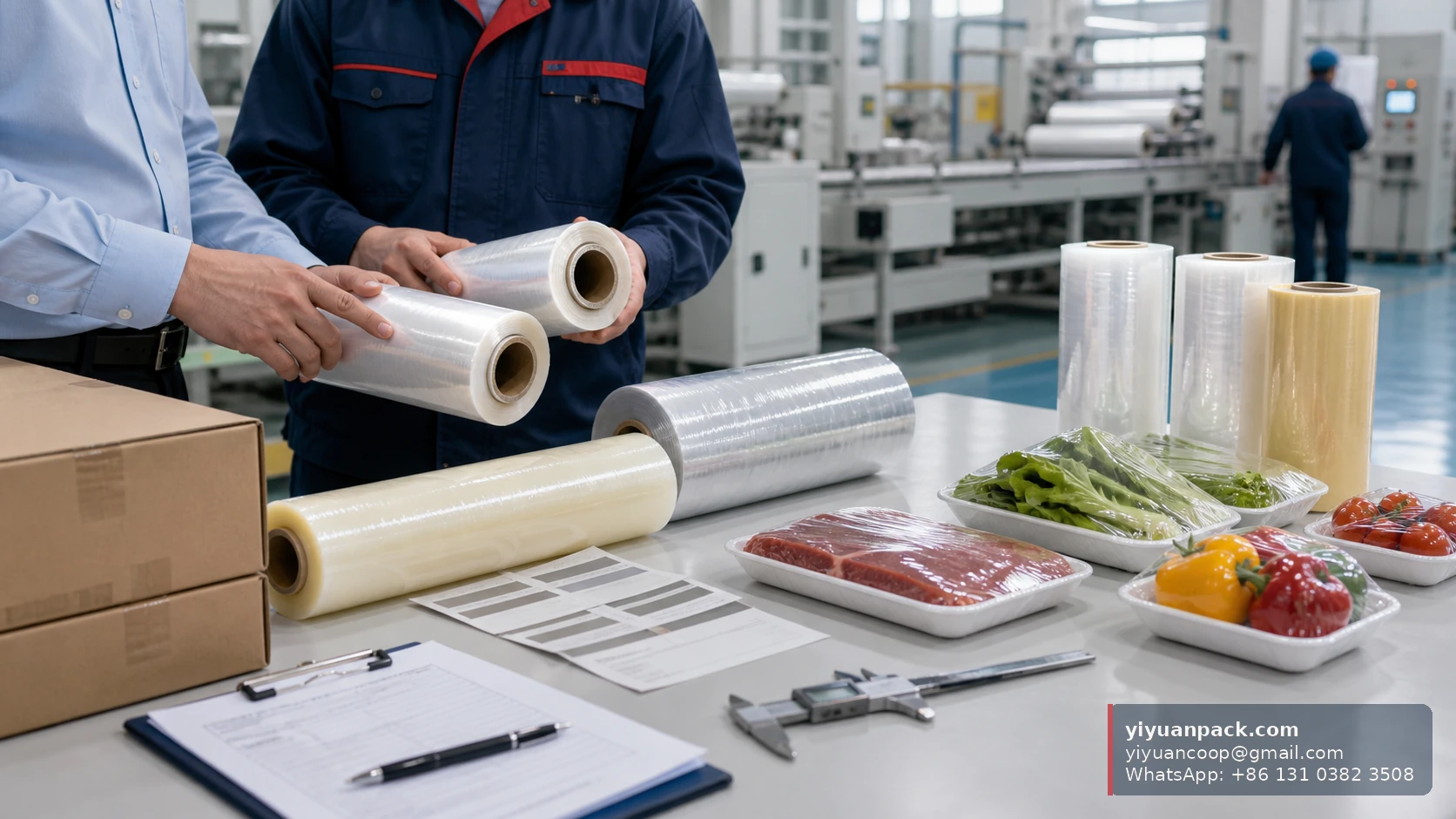
- Approve film sample for width, length, cling, stretch, clarity, and cutting behavior.
- Approve cutter box sample or mockup for box strength, blade position, and pull-out experience.
- Review artwork dieline, barcode position, language, carton marks, and product claims.
- Confirm carton quantity, carton size, gross weight, pallet loading, and shipping marks.
- Confirm food-contact documents and destination market requirements before production.
FAQ
What is private label cling film?
Private label cling film is food wrap produced for a buyer's own brand. It can include custom box artwork, carton marks, roll size, material selection, and packaging format.
Can I customize both PE cling film and PVC fresh wrap?
Yes. Buyers can develop private label products with PE cling film or PVC fresh wrap, but the correct material depends on food use, sales channel, tray wrapping needs, and destination market requirements.
What affects MOQ for private label cling film?
MOQ can be affected by film material, roll size, printing method, cutter box design, carton printing, packaging structure, and whether the buyer chooses standard or fully custom specifications.
Should I approve artwork before testing the film?
No. Buyers should test the film first or at least confirm the final specification before approving artwork. Otherwise, the printed box may describe a product size or use case that changes later.
Can YIYUAN help with carton packing and pallet planning?
YIYUAN can review roll size, pieces per carton, carton size, gross weight, and pallet loading based on the buyer's destination and shipping requirements.
What should I send for a private label cling film quote?
Send material preference, roll width, roll length, core size, box type, artwork needs, carton packing, destination market, first-order quantity, and any food-contact or retail channel requirements.
Can I start with a small trial order?
A trial order may be possible if the buyer uses standard film specifications and simpler packaging. Fully custom printing and special sizes usually require higher MOQ and longer preparation.
Final Notes
If you are planning a private label cling film product, start with the market and use case first. YIYUAN can review material choice, roll size, cutter box design, carton packing, artwork requirements, and sample approval steps before production.
Request private label packaging support