'%20d='m0%200%2016%2011h61%2061%2061%2061%2060L47%2037h61%2061%2060%2061L16%2063h61%2061%2061%2061%2060L47%2089h61%2061%2060%2061L16%20115h61%2061%2061%2061%2060L47%20141h61%2061%2060%2061L16%20166h61%2061%2061%2061%2060L47%20192h61%2061%2060%2061L16%20218h61%2061%2061%2061%2060z'/%3e%3c/svg%3e)

'%3e%3cpath%20fill='%23C00'%20d='M0%200h640v480H0z'/%3e%3cpath%20fill='%23C00'%20d='M0%200h640v34.3H0z'/%3e%3cpath%20fill='%23fff'%20d='M0%2034.3h640v34.3H0z'/%3e%3cpath%20fill='%23C00'%20d='M0%2068.6h640v34.3H0z'/%3e%3cpath%20fill='%23fff'%20d='M0%20102.9h640V137H0z'/%3e%3cpath%20fill='%23C00'%20d='M0%20137.1h640v34.3H0z'/%3e%3cpath%20fill='%23fff'%20d='M0%20171.4h640v34.3H0z'/%3e%3cpath%20fill='%23C00'%20d='M0%20205.7h640V240H0z'/%3e%3cpath%20fill='%23fff'%20d='M0%20240h640v34.3H0z'/%3e%3cpath%20fill='%23C00'%20d='M0%20274.3h640v34.3H0z'/%3e%3cpath%20fill='%23fff'%20d='M0%20308.6h640v34.3H0z'/%3e%3cpath%20fill='%23C00'%20d='M0%20342.9h640V377H0z'/%3e%3cpath%20fill='%23fff'%20d='M0%20377.1h640v34.3H0z'/%3e%3cpath%20fill='%23C00'%20d='M0%20411.4h640v34.3H0z'/%3e%3cpath%20fill='%23fff'%20d='M0%20445.7h640V480H0z'/%3e%3cpath%20fill='%23006'%20d='M0%20.5h320v274.3H0z'/%3e%3cpath%20fill='%23FC0'%20d='m207.5%2073.8%206%2040.7%2023-34-12.4%2039.2%2035.5-20.8-28.1%2030%2041-3.2-38.3%2014.8%2038.3%2014.8-41-3.2%2028.1%2030-35.5-20.8%2012.3%2039.3-23-34.1-6%2040.7-5.9-40.7-23%2034%2012.4-39.2-35.5%2020.8%2028-30-41%203.2%2038.4-14.8-38.3-14.8%2041%203.2-28.1-30%2035.5%2020.8-12.4-39.3%2023%2034.1zm-33.3%201.7a71%2071%200%200%200-100%2065%2071%2071%200%200%200%20100%2065%2080%2080%200%200%201-83.2%206.2%2080%2080%200%200%201-43.4-71.2%2080%2080%200%200%201%20126.6-65'/%3e%3c/g%3e%3cdefs%3e%3cclipPath%20id='my-a'%3e%3cpath%20fill='%23fff'%20d='M0%200h640v480H0z'/%3e%3c/clipPath%3e%3c/defs%3e%3c/svg%3e)

'%20transform='translate(80)scale(.9375)'%3e%3cpath%20fill='%23da251d'%20d='M-128%200h768v512h-768z'/%3e%3cpath%20fill='%23ff0'%20d='M349.6%20381%20260%20314.3l-89%2067.3L204%20272l-89-67.7%20110.1-1%2034.2-109.4L294%20203l110.1.1-88.5%2068.4%2033.9%20109.6z'/%3e%3c/g%3e%3c/svg%3e)

scale(176.87999)'%3e%3cpath%20id='mm-a'%20fill='%23fff'%20d='m0-1%20.3%201h-.6z'/%3e%3cuse%20xlink:href='%23mm-a'%20width='100%25'%20height='100%25'%20transform='rotate(-144)'/%3e%3cuse%20xlink:href='%23mm-a'%20width='100%25'%20height='100%25'%20transform='rotate(-72)'/%3e%3cuse%20xlink:href='%23mm-a'%20width='100%25'%20height='100%25'%20transform='rotate(72)'/%3e%3cuse%20xlink:href='%23mm-a'%20width='100%25'%20height='100%25'%20transform='rotate(144)'/%3e%3c/g%3e%3c/svg%3e)

'/%3e%3cuse%20xlink:href='%23cn-a'%20width='30'%20height='20'%20transform='matrix(-12.33562%20-20.5871%2020.58684%20-12.33577%20240.3%2048)'/%3e%3cuse%20xlink:href='%23cn-a'%20width='30'%20height='20'%20transform='matrix(-3.38573%20-23.75998%2023.75968%20-3.38578%20288%2095.8)'/%3e%3cuse%20xlink:href='%23cn-a'%20width='30'%20height='20'%20transform='matrix(6.5991%20-23.0749%2023.0746%206.59919%20288%20168)'/%3e%3cuse%20xlink:href='%23cn-a'%20width='30'%20height='20'%20transform='matrix(14.9991%20-18.73557%2018.73533%2014.99929%20240%20216)'/%3e%3c/svg%3e)
'%20transform='translate(88%20-32)'%3e%3cpath%20fill='%23fff'%20d='M-128%2032h720v480h-720z'/%3e%3ccircle%20cx='523.1'%20cy='344.1'%20r='194.9'%20fill='%23bc002d'%20transform='translate(-168.4%208.6)scale(.76554)'/%3e%3c/g%3e%3c/svg%3e)
'%20transform='translate(89.8%20.4)scale(.9375)'%3e%3cpath%20fill='%23fff'%20d='M-95.8-.4H587v512H-95.8Z'/%3e%3cg%20transform='rotate(-56.3%20361.6%20-101.3)scale(10.66667)'%3e%3cg%20id='kr-c'%3e%3cpath%20id='kr-b'%20fill='%23000001'%20d='M-6-26H6v2H-6Zm0%203H6v2H-6Zm0%203H6v2H-6Z'/%3e%3cuse%20xlink:href='%23kr-b'%20width='100%25'%20height='100%25'%20y='44'/%3e%3c/g%3e%3cpath%20stroke='%23fff'%20d='M0%2017v10'/%3e%3cpath%20fill='%23cd2e3a'%20d='M0-12a12%2012%200%200%201%200%2024Z'/%3e%3cpath%20fill='%230047a0'%20d='M0-12a12%2012%200%200%200%200%2024A6%206%200%200%200%200%200Z'/%3e%3ccircle%20cy='-6'%20r='6'%20fill='%23cd2e3a'/%3e%3c/g%3e%3cg%20transform='rotate(-123.7%20191.2%2062.2)scale(10.66667)'%3e%3cuse%20xlink:href='%23kr-c'%20width='100%25'%20height='100%25'/%3e%3cpath%20stroke='%23fff'%20d='M0-23.5v3M0%2017v3.5m0%203v3'/%3e%3c/g%3e%3c/g%3e%3c/svg%3e)




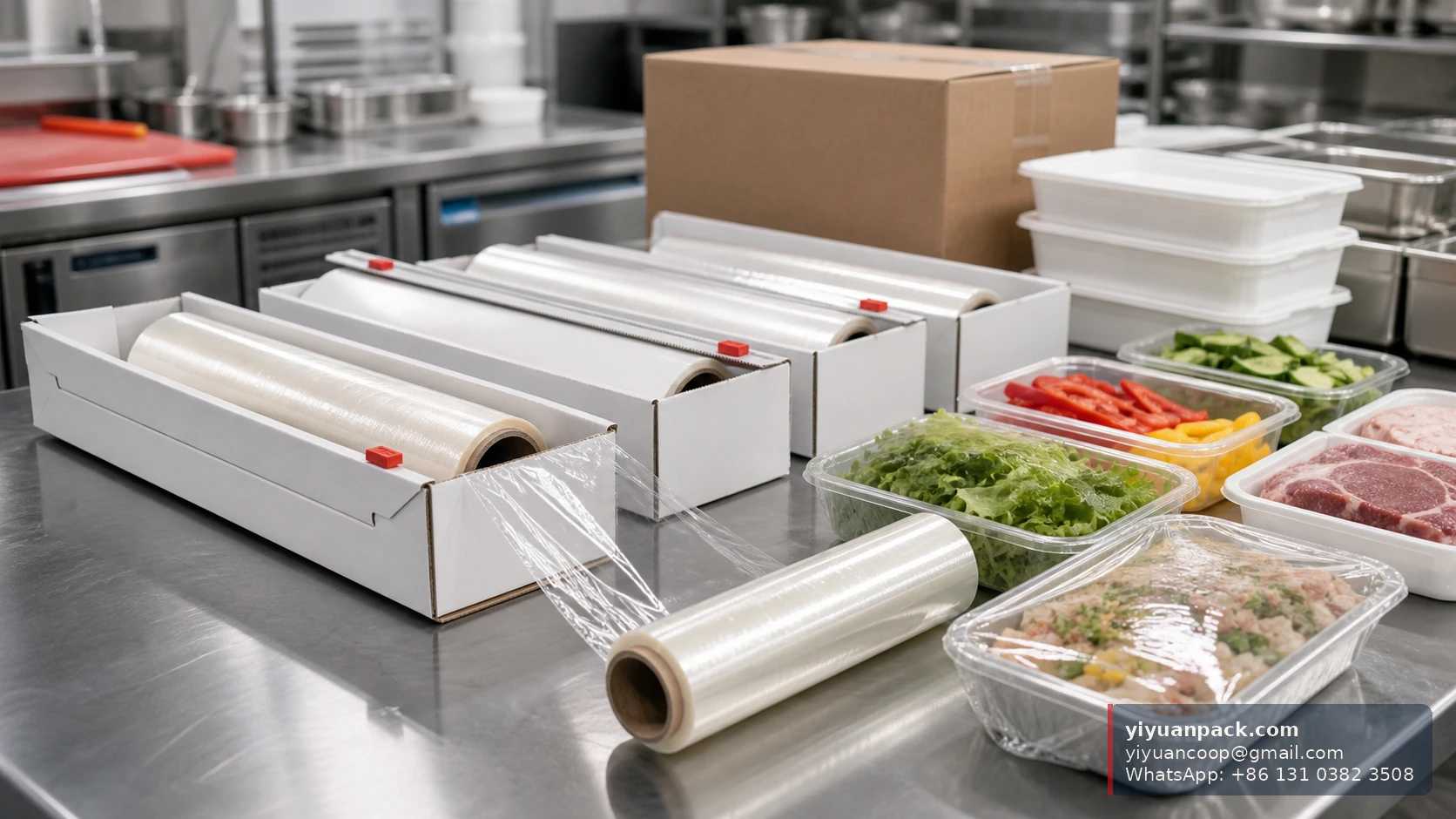
Food service cling film rolls are judged in busy kitchens, not only on a supplier's quotation sheet. Restaurant, hotel, catering, and food-service distributors need a film that wraps quickly, tears cleanly, fits common containers, and arrives in cartons that are easy to store and resell. The right specification depends on width, roll length, cutter box structure, carton packing, and whether the buyer is supplying restaurants, hotels, supermarkets, or mixed food-service accounts.
- Food-service rolls should be selected by kitchen workflow, not only by film width and price.
- Common buyer checks include roll width, roll length, box strength, cutter performance, carton quantity, and shelf storage.
- Restaurants often care about fast tearing and container coverage; distributors care about carton durability and repeatable SKU planning.
- PE and PVC options should be tested against the buyer's food type, container shape, and local documentation requirements.
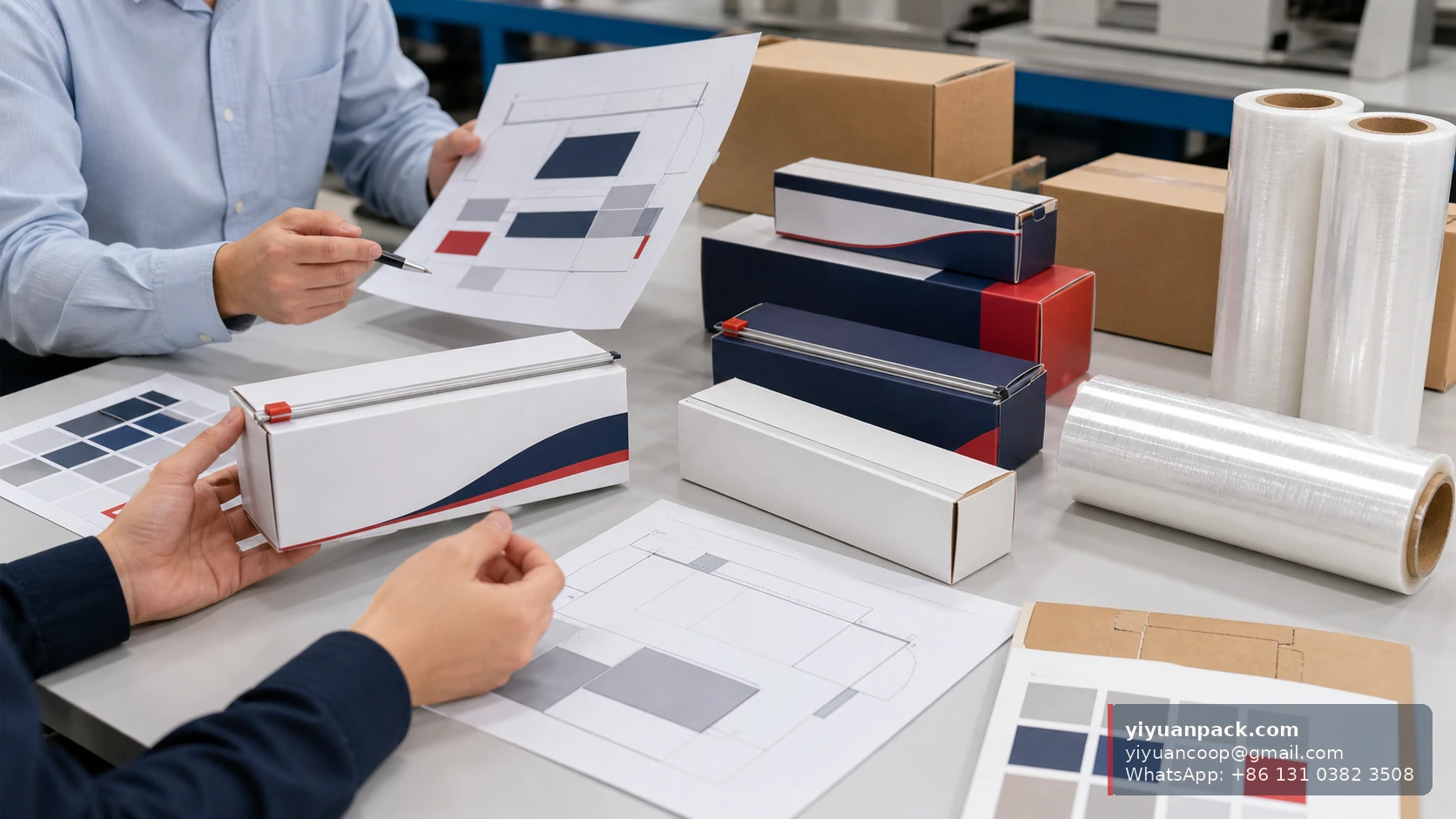
- Private-label cutter boxes need artwork, barcode, box material, blade style, and carton packing confirmed before mass production.
This guide uses YIYUAN cling film product information, common food-service packaging sourcing checks, and public food-contact material context such as the FDA food-contact substances explanation. It focuses on purchasing and specification checks rather than making universal food-safety claims. Buyers should confirm documents, market requirements, and sample performance before bulk orders.
For food-service cling film, the best roll is the one kitchen staff can use quickly and consistently. A buyer should confirm width, roll length, cutter box quality, film cling, tearing behavior, carton packing, and whether the film works with the containers used by restaurants or catering customers. If the buyer is also building a private-label SKU, artwork and retail box durability become part of the sourcing decision.
Why Food-Service Rolls Are Different
A household roll may be used a few times per week. A food-service roll may be used repeatedly through a lunch rush, catering prep, deli service, or hotel kitchen shift. That changes what buyers should test. The film should cover trays and containers quickly, the cutter should not frustrate staff, and the box should survive handling on a busy prep table.
Representative buyer scenario: A restaurant supply distributor wants one cling film SKU for small restaurants and another for hotel kitchens. The small restaurant wants a practical cutter box that fits limited storage. The hotel kitchen wants longer rolls and stronger cartons because the product is used every day.
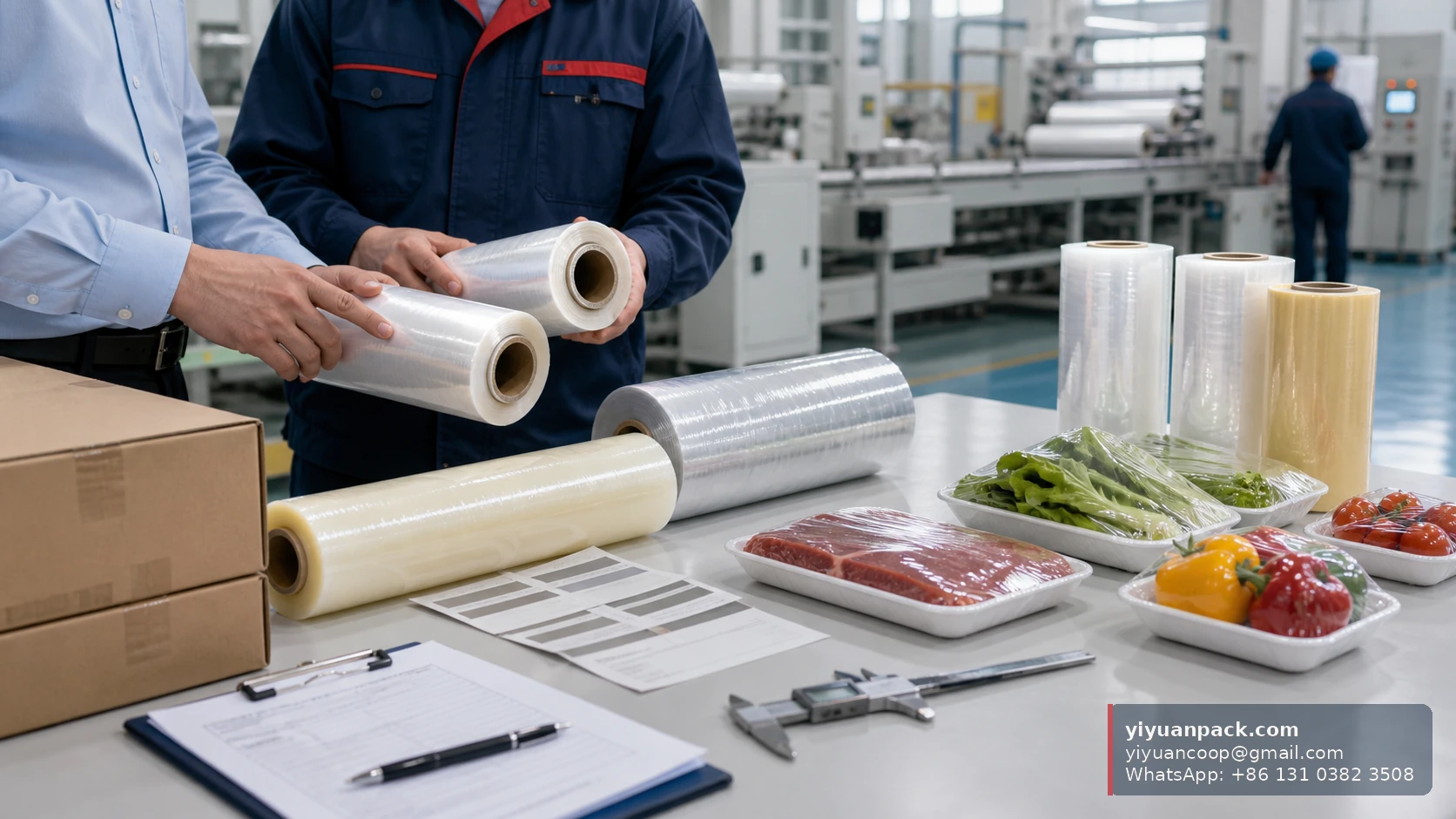
YIYUAN's cling film and fresh wrap range can be evaluated by finished roll format, jumbo roll supply, and cutter box packing. The buyer should decide whether the target customers need PE food wrap, PVC fresh wrap, or both.
Width and Roll Length by Kitchen Use
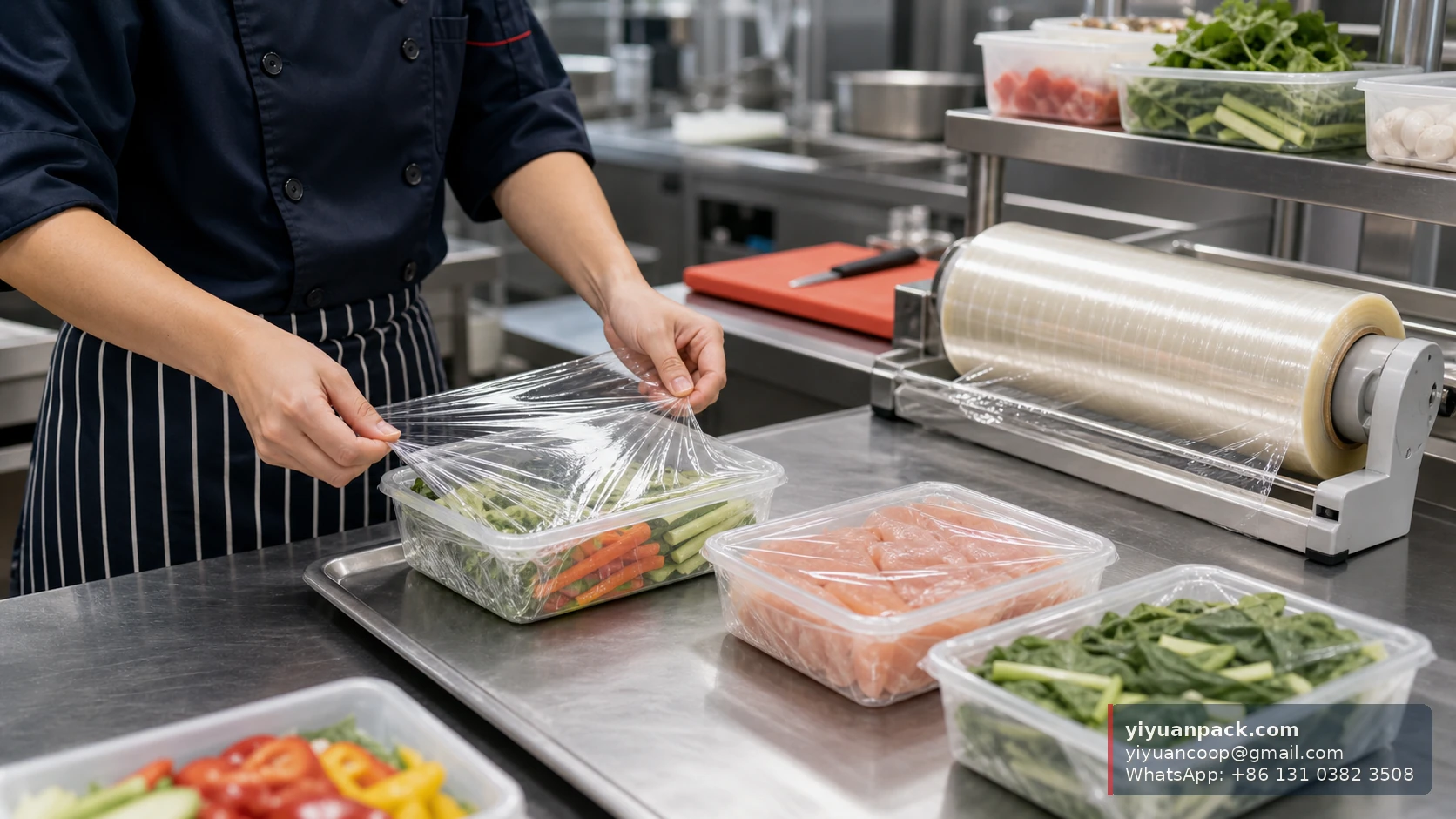
Width should match the container or tray size. A narrow roll may be easier to store but may require double wrapping larger containers. A wider roll can cover trays faster but may feel wasteful for small containers. Roll length affects how often kitchens replace rolls and how distributors position the SKU.
| Use Case | Buyer Concern | Specification Check |
|---|---|---|
| Small restaurants | Easy storage and quick daily use | Check roll width, cutter box size, and carton quantity |
| Hotels and catering | Longer rolls and frequent use | Check roll length, box durability, and replacement frequency |
| Deli and prepared food | Tray coverage and clear display | Test cling, clarity, and tray fit with real food trays |
| Distributor resale | Repeatable SKU and carton strength | Confirm barcode, carton label, carton size, and pallet loading |
Cutter Box Quality Matters
Many food-service buyers focus on film first and box second. In real use, the cutter box can decide whether customers reorder. A weak box bends on a prep table. A poor blade wastes film. A badly placed roll can make the film hard to pull. For private-label orders, the cutter box also carries the buyer's brand, instructions, barcode, and shelf impression.
Daily handling
Check whether the box stays stable when staff pull film repeatedly during kitchen work.
Clean tear
Test whether the blade or cutter edge tears film cleanly without dragging or bunching.
Private label
Confirm artwork, barcode, warning text, language, and carton label before final production.
PE or PVC for Food-Service Rolls?
Food-service buyers may choose PE cling film, PVC fresh wrap, or both, depending on the channel. PE can be a practical general wrap option. PVC may be considered when stronger cling and clear tray presentation are important. The final choice should be based on the customer's food type, container shape, local market requirements, and sample testing.
Do not treat material name as the whole decision. A buyer should compare film feel, cling, tearing behavior, roll fit, and food-contact documents. If the product will be used for multiple restaurants and food types, it is reasonable to request samples of both material options before building a container order.
Which Buyer Fits Each Food-Service Roll Option?
For fast restocking
Choose standard export rolls if the buyer wants a practical SKU, faster confirmation, and fewer artwork decisions for the first order.
For distributors and brands
Choose private-label cutter boxes if the buyer already has sales channels, barcode requirements, and brand packaging standards.
For broad food-service accounts
Compare PE and PVC samples if the distributor serves restaurants, hotels, deli counters, and supermarkets with different wrapping needs.
Buyer Checklist Before Ordering Food-Service Film
- Confirm target customers: small restaurants, hotels, catering, deli counters, or distributors.
- Confirm roll width, roll length, core size, and finished roll weight.
- Test cutter box strength, blade performance, and film pull-out behavior.
- Confirm material choice and food-contact documentation needs for the destination market.
- Check carton quantity, carton size, barcode, carton label, and pallet loading.
- For private label, confirm artwork, language, color, barcode, and approval sample.
- Compare landed cost per usable roll, not just ex-factory unit price.
FAQ
What is food-service cling film?
It is cling film supplied for restaurants, catering, hotels, deli counters, and other commercial food preparation channels. Buyers usually focus on roll size, cutter box usability, carton packing, and repeatable supply.
What roll width should restaurant suppliers choose?
The width should match the containers and trays used by the target customers. Buyers should test common container sizes before committing to a full order, especially if one SKU is expected to serve several food-service channels.
Is PE or PVC better for food-service film?
PE can work well for general food wrap needs, while PVC may be chosen for stronger cling and tray presentation. The better option depends on food type, container shape, market documents, and sample performance.
Can I customize the cutter box?
Yes, private-label cutter boxes can usually be planned with custom artwork, barcode, language, carton label, and packing details. Buyers should approve box artwork and physical samples before mass production.
What causes complaints with food-service cling film?
Common complaints include weak cutter boxes, difficult tearing, film breaking, poor cling, cartons damaged in shipment, and roll length not matching the buyer's expectation. Most can be reduced through sample testing and clear specifications.
What should I send for a food-service roll quotation?
Send target roll width, roll length, material preference, cutter box style, private-label needs, carton quantity, destination market, first-order quantity, and whether you need food-contact documents for a specific region.
Final Notes
If you are sourcing food-service cling film rolls, test the film and the cutter box together. YIYUAN can review your target channel, roll size, carton packing, and private-label requirements before quotation.
Send food-service film requirements